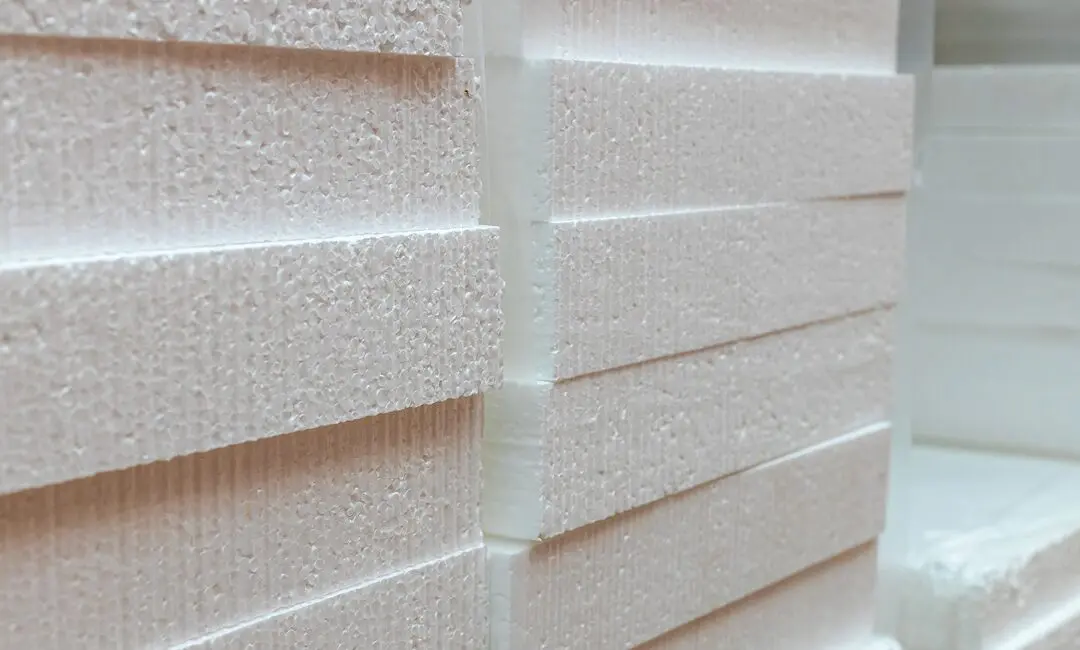
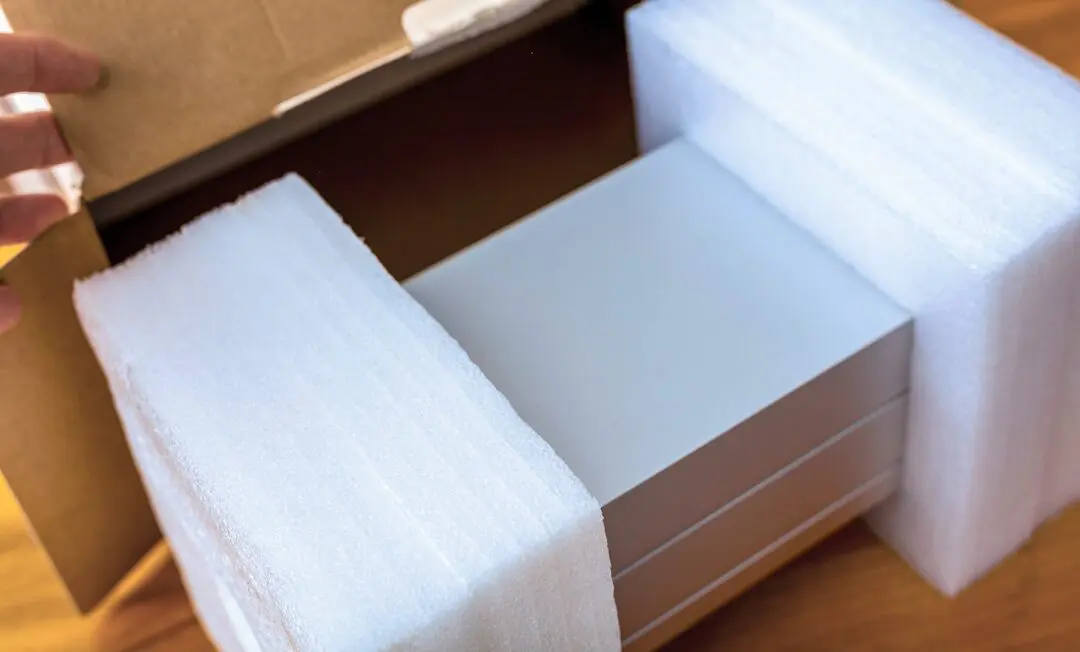
Specifying foam materials is complex. Choosing the wrong type can cause inadequate protection, poor surface quality, dimensional drift, or higher costs.
Polyethylene (PE), polyurethane (PU), and crosslinked polyethylene (XLPE) are mainstay foams in U.S. markets for packaging, cushioning, insulation, and industrial parts.
Each foam has a unique structure and performance. They are not interchangeable; each excels in different applications.
Here’s how these three foams differ in structure, specifications, and best-fit uses.
Polyethylene Foam (PE)
PE foam is closed-cell, lightweight, and resilient. Its sealed-cell structure delivers strong moisture and chemical resistance, consistent recovery after compression, and natural buoyancy. PE is available in multiple densities—higher density means a tighter cell structure and a harder foam. Common densities like 1.7 and 2.2 lb often contain approximately 60% recycled content and are near-infinitely recyclable, making PE one of the more environmentally favorable foam options available.
PE foam is widely used in protective packaging, marine flotation, construction underlayment, medical packaging, industrial cushioning, and high-end electronics. It performs reliably wherever impact protection, moisture resistance, or vibration damping is required. Cut edges can appear rough, but the poured skin surface is smooth. PE is not a low-grade material. In PE, density primarily affects impact absorption rather than overall longevity—a key distinction from polyurethane, where density drives quality and lifespan.
PE’s main limitations are finish quality and long-term dimensional stability. Standard PE has a coarser cell structure than finer grades, which leads to rougher cut edges. In outdoor or weather-exposed applications—sports padding, baseball field padding, and similar uses—temperature cycling and gradual gas loss from cells cause PE to shrink over time. Oversizing foam at the design stage is a common way to account for this.
Polyurethane Foam (PU)
PU foam is open-cell and flexible, available across a wide range of densities and firmness levels. Unlike PE, where density primarily affects impact absorption, PU density directly correlates with quality, lifespan, and price. Low-density PU around 1 lb is economical and suited for single-use or throwaway packaging, but it crushes and becomes brittle within months. Mid-density PU in the 1.5–1.8 lb range is more durable and commonly used in reusable packaging like camera cases. Higher-density PU around 2–2.4 lb is specified for high-end furniture cushions and similar applications requiring years of use without significant compression loss.
The open-cell structure allows airflow throughout, making PU well suited for seating and comfort, acoustic absorption, filtration, case interiors, and packaging for electronics, toys, and other items requiring a softer, conformable foam.
The open-cell structure also means PU absorbs moisture readily. In wet or high-humidity environments, absorbed moisture adds weight and causes the foam to lose structural integrity over time. PU also has lower chemical resistance than PE or XLPE, and is not the right choice where dimensional stability under repeated compression is critical. PU can be recycled into shredded fill for beanbags and pillows, or processed into rebound foam for carpet underlayment—but it is not as repeatedly recyclable as PE, as glue content in rebound foam makes further recycling difficult once it degrades.
Crosslinked Polyethylene Foam (XLPE)
XLPE starts with the same base polymer as standard PE, but the crosslinking process chemically “locks together” the polymer chains, producing a microcellular structure with very small cells, less internal gas, and a denser foam. The result is excellent dimensional stability—minimal shrinkage or expansion over time, strong bounce back, firm compression response, and near-imperviousness to water.
XLPE’s finer cell structure produces cleaner edges, smoother surfaces, and more consistent density throughout finished parts. One fabrication consideration: long-radius shapes such as bolsters and half-moon forms used in medical and chiropractic body positioners can be more difficult to fabricate accurately in XLPE than in PU or PE. For flat or geometric parts cut on a waterjet, XLPE delivers excellent tolerances. For complex curved forms, shape geometry should factor into material selection alongside environmental and performance requirements.
XLPE is specified when tight tolerances, surface finish, or performance documentation are required. Its microcellular structure is naturally antimicrobial—small cells leave little space for bacteria, and strong chemical resistance allows aggressive cleaning without damaging the material. These properties make it the standard choice for medical device packaging, orthotic and prosthetic components, aerospace, automotive interiors, and Mil-spec applications. When rework or field failure cost exceeds material cost, XLPE is the logical specification.
Side-by-Side Comparison
| Property | PE Foam | Polyurethane (PU) | Crosslinked PE (XLPE) |
| Cell Structure | Closed-cell | Open-cell | Closed-cell (finer) |
| Moisture Resistance | High | Low | Very High |
| Surface Finish | Semi-Rough | Smooth | Every Smooth |
| Dimensional Stability | Good | Varies by density | Excellent |
| Density Range | 1.2–9 lb/ft³ | 1–3 lb/ft³ | 1.5–6 lb/ft³ |
| Common Applications | Protective pkg, marine, medical, construction | Seating, acoustics, filtration, case interiors | Medical device, aerospace, orthotics, high-tolerance pkg |
| Available at Keystone | Yes | Yes | Yes |
Matching Foam Material to Application
When it comes to PE, PU, and XLPE, these four questions help narrow the material decision quickly:
1. What forces will the foam need to absorb?
Different foam structures and densities respond best to specific forces: PE or XLPE works well in high-impact or wet environments, while PU is preferred for sustained compression and comfort. When choosing, weigh each foam’s core advantage for your application’s forces.
2. Will the foam be exposed to moisture, chemicals, or temperature extremes?
Closed-cell foams like PE and XLPE withstand exposure to moisture and chemicals far better than open-cell PU foams. If the environment involves fluids or outdoor use, favor PE or XLPE; PU is not well-suited to these conditions.
3. What are the weight and cost constraints?
Standard PE is cost-effective and lightweight. XLPE adds cost but cuts scrap and rework in tight-tolerance jobs. PU cost varies by grade. Always consider total cost—material, fabrication, and field performance—over unit price.
4. Is this a packaging component, a functional part, or both?
Packaging prioritizes protection and cost. Functional components—orthotics, acoustics, case inserts—require precise material-performance matches. Some cases need laminated, multi-material solutions.
Looking for foam fabrication partner you can trust?
Keystone Foam has fabricated PE, PU, and XLPE foam for more than 40 years across medical, industrial, military, and packaging applications. Whether the requirement is a standard cushioning material or a close-tolerance XLPE component, Keystone has the in-stock material selection, engineering and fabrication capabilities, and application experience to help get it right the first time.
__
FAQs
1) What is the difference between PE foam and crosslinked PE foam?
Both are closed-cell polyethylene foams, but crosslinked PE (XLPE) goes through an additional process that bonds the polymer chains together. The result is a finer cell structure, cleaner cut edges, better surface finish, and more consistent density across the part. Standard PE is the right call for general-purpose applications; XLPE is specified when tolerances, aesthetics, or performance documentation matter.
2) When should I use polyurethane foam instead of polyethylene?
PU foam is the better choice when comfort, acoustic performance, or conformability is the primary requirement. It is an open-cell material that allows airflow and adapts to shape under pressure, which is why it is standard in seating, acoustical panels, and filtration. If the application involves moisture exposure or requires dimensional stability, PE or XLPE is typically the better specification.
3) Which foam is best for medical or high-tolerance applications?
Crosslinked polyethylene foam is most commonly specified for medical device packaging, orthotic and prosthetic components, and other applications requiring tight tolerances, clean surfaces, and consistent material properties. is It is naturally anti-bacterial and chemically resistant. Keystone fabricates XLPE in grades including Volara and Minicel and has experience with medical and Mil-spec documentation requirements.
4) Does Keystone Foam fabricate all three material types?
Yes. Keystone Foam fabricates polyethylene (PE), polyurethane (PU), and crosslinked polyethylene (XLPE) foam across a full range of densities and grades. The company also fabricates EVA, EPS, EPP, neoprene, viscoelastic foam, and other specialty materials. Contact Keystone to discuss specific application and material requirements.