In industrial component packaging, the foam often stands between a happy customer and a potentially expensive problem. A scratched lens, a cracked housing, or a sensitive instrument knocked out of tolerance means more than a damaged part. It can trigger a return, a replacement or a delay your customer remembers.
At Keystone Foam, we engineer industrial packaging foam solutions to meet each customer’s toughest demands while delivering the look and feel they want.
What Makes Industrial Components Different
Industrial components range from small precision instruments to heavy machined gears and spindles. They share a sensitivity that makes protective packaging necessary.
That sensitivity takes different forms. For some components, it’s appearance: a polished or finished surface that can’t show a scratch. For others, it’s precision: a CNC part cut to the thousandth of an inch or a finely calibrated measuring tool. Electronics often require protection against several kinds of damage at once, including static electricity.
Industrial packaging goals vary as well. Most industrial customers care more about reducing breakage and returns than about how the packaging looks. The foam proves its value through a clear return on investment.
Key Factors in Choosing the Right Foam
1. Weight and part material
A part’s weight and material determine how firm the foam should be. Even small industrial parts are often solid metal.
-
Too soft: The foam doesn’t offer enough protection. It can tear, or parts can shift inside the packaging during transit.
-
Too firm: The shock from a drop or impact passes through to the part instead of being absorbed by the foam.
2. Protection vs. presentation
Some foam materials look and feel premium. Others don’t present as well but offer the same protection, often at a lower price. Most industrial applications prioritize protection and cost, but premium finishes are available when presentation matters.
3. Surface sensitivity
Parts with delicate finishes or Class A screens need low-abrasion materials that won’t scuff or mark a component’s surface. Electronics may also need anti-static foam. [See: Materials page]
4. Shape and part count
Unique component shapes often require custom-engineered cavities. For multi-part packaging, the walls between components must be strong enough to keep heavier parts from shifting or tearing through. Our in-house engineers design precision cavities and dividers with both fit and fabrication in mind.
Foam Materials for Industrial Packaging
Polyethylene (PE)
PE foam is the go-to choice for industrial packaging, and standard PE isn’t very abrasive. Industrial parts are often heavier than consumer products, so they usually call for higher densities. Where 1.7# PE works well for a consumer part, an industrial part often needs 4# or 6# PE to handle the added mass.
Crosslinked Polyethylene (XLPE)
XLPE is even less abrasive than PE. While it costs slightly more, its properties make it the right foam for most components with delicate surfaces or Class A screens. Its micro-cell structure also has a smooth look and feel for customers who want a more premium presentation.
Finished Look Options
When a product needs a high-end finished look, our team at Keystone Foam can apply a simulated velvet face finish, such as Sim-U-Vel, at minimal added cost. Sim-U-Vel is available in a wide range of colors, and Keystone stocks black and dark blue.
For a deeper look at how these common industrial component packaging foams compare, see Polyethylene vs. Polyurethane vs. XLPE: Key Foam Differences.
Custom Foam Packaging for Industries Keystone Foam Serves
| Industry | Components | Foam Considerations |
| Industrial Tools & Dies | CNC milling bits, precision tooling | Higher-density PE (4# or 6#) for heavy metal parts |
| Ophthalmology Equipment | Eye-care devices and instruments | Low-abrasion protection for precision instruments |
| Medical Devices | Surgical tool kits, portable monitors, laboratory instruments | Custom cavities that keep multiple components secure |
| Glass & Optics | Lenses, mirrors, coated metal parts | Low-abrasion materials such as XLPE for delicate surfaces |
| Electronic Components | Sensitive electronic parts | Low-abrasion and anti-static foam |
| Drones | Drones and components in transport cases | Custom-fit case inserts |
| Aerospace & Defense | Machined hardware, parts, precision instruments | Foams that meet Mil-Spec requirements [Link: Mil-Spec page] |
Protective Foam Packaging Solutions for Emerging Industries
| Industry | Applications | Foam Considerations |
| Defense & Drone/UAV Equipment | Drones, vehicle components and military equipment in large protective cases | Large-format custom case inserts |
| Medical & Diagnostic Devices | Measurement and high-tech equipment | Low abrasion combined with high protection |
| Precision Electronics & Semiconductors | Sensitive electronic components | Low-abrasion and anti-static foam |
| Industrial Automation & Robotics | Precision components and assemblies | Custom-fit protection for unique shapes and heavy weights |
Looking for a Foam Fabrication Partner?
For more than 40 years, Keystone Foam has fabricated custom foam solutions for packaging, medical, industrial, and military applications. Our in-house engineers design with manufacturing in mind. Our fabrication methods, including die cutting, waterjet, and laser cutting, let us match the process to each project’s requirements and volume. [Learn more: Custom Foam Prototyping]
Whether you’re shipping tooling, optics, or defense components, the Keystone Foam team can design the right foam solution to protect your parts and deliver a strong return on investment. Contact us to get started, and share your part’s weight, dimensions, material, and surface requirements with our team.
__
FAQs
What is industrial component packaging?
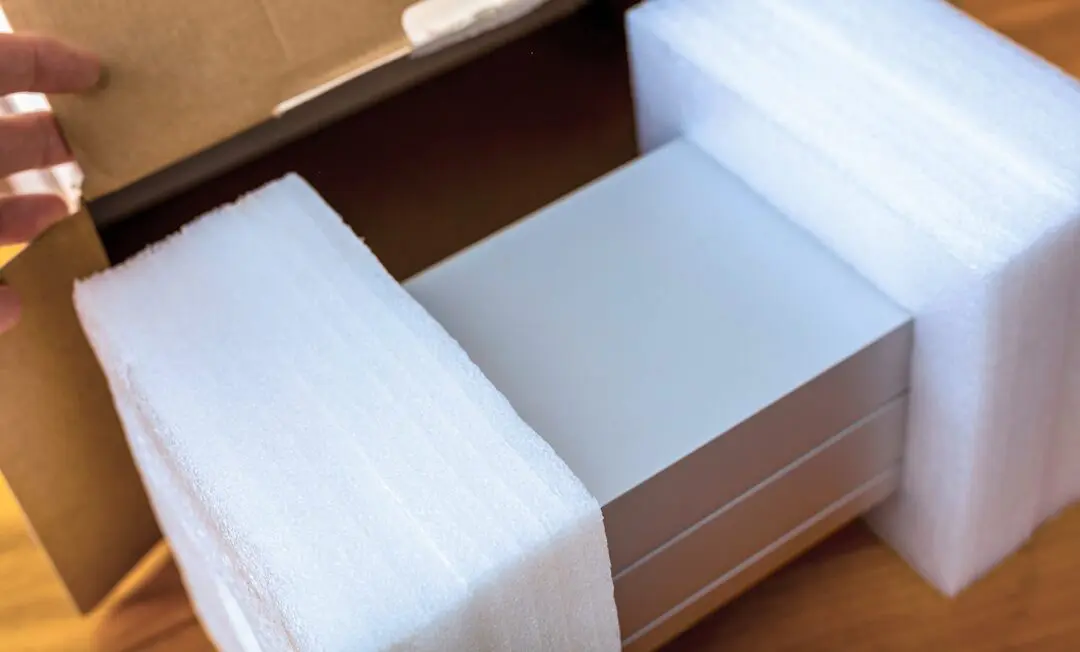
It’s a system of containment, internal cushioning, and outer barriers built to protect precision, high-value, or fragile machine and manufacturing components. Custom foam inserts provide the cushioning and hold each part securely in place.
What foam is most common for industrial component packaging?
Polyethylene (PE) is the go-to choice. Because industrial parts are often heavier, they typically call for higher densities, such as 4# or 6# PE, compared with 1.7# for many consumer products.
How do I know how firm the foam should be?
It depends on the part’s weight and material. Foam that’s too soft can tear and let parts shift. Foam that’s too firm passes shock from a drop or impact to the part instead of absorbing it.
When is XLPE worth the added cost?
XLPE is less abrasive than standard PE, so it suits parts with delicate surfaces or Class A screens. Its smooth micro-cell finish also makes it a strong choice when presentation matters.
Can industrial packaging still look finished and high-end?
Yes. XLPE offers a smooth, premium look and feel. A face finish such as Sim-U-Vel can add a high-end appearance without adding much cost.
What information do you need to quote a project?
Part weight, dimensions, the material the part is made of, surface requirements, and any presentation preferences. With that information, our team can recommend the right foam and fabrication method.
Do I need CAD files to start a custom foam project?
No. Keystone Foam can start with a sketch, concept, template, or the product itself. Our in-house engineers develop the CAD files for you.